




If the words “we’re going to the dentist” send your child running for the other room, you’re not alone. It’s one of the most common things parents bring up when they call our Carlsbad office, and honestly, it makes sense. A dental visit means strangers, strange sounds, bright lights, and someone’s hands in their mouth, all at once. That’s a lot for a kid to take in.
Here’s what years of working with kids have taught us: even the most anxious child can walk out of an appointment feeling okay about it. Some of our most nervous first-timers are now the ones asking when they get to come back.
That comes down to three things: how we structure the appointment, how our team talks to kids, and what happens at home before your child ever walks through our doors. That last one matters more than most parents expect, so that’s where we’ll start.
Key Takeaways
- Dental anxiety is common in children and can often be managed with the right preparation and support.
- Use simple, positive language when explaining the upcoming appointment.
- Pediatric dentists receive additional training in child development, behavior, and comfort.
- Nitrous oxide or sedation may be appropriate for children who need more support.
- Sensory-friendly accommodations can make visits easier for children with autism, ADHD, or sensory differences.
- Addressing dental anxiety early can prevent it from becoming more severe.
What Is Dental Anxiety in Children?
Dental anxiety is more than pre-appointment nerves. It’s a real fear, and it shows up in different ways: tears, tantrums, stomachaches, trouble sleeping, or point-blank refusing to open up once they’re in the chair.
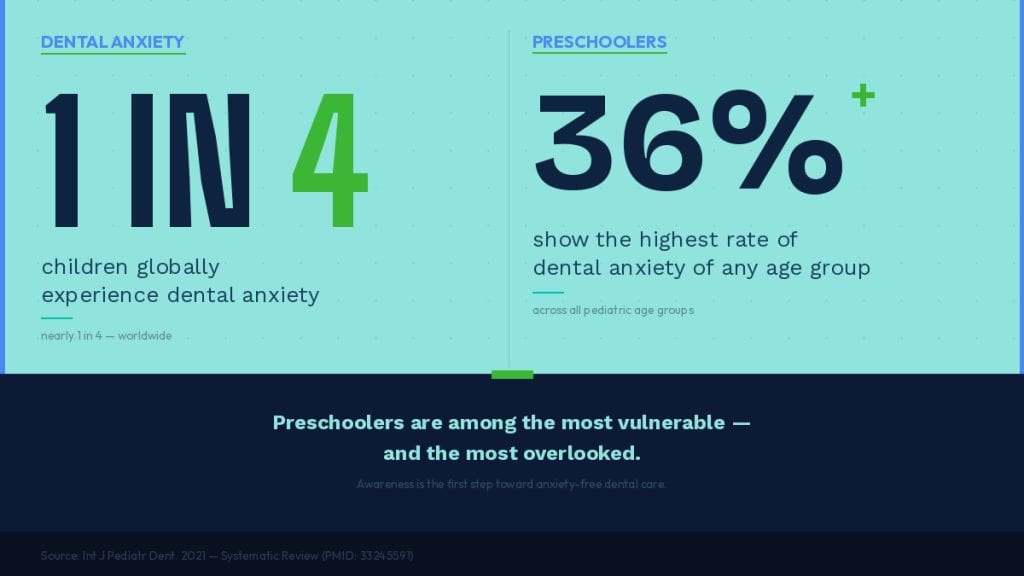
A 2021 systematic review published in the International Journal of Pediatric Dentistry found that dental anxiety affects nearly one in four children worldwide. Preschoolers have the highest rates of any age group, over 36%, and that number climbs higher for kids who’ve had a rough visit before or who deal with sensory sensitivities.
Without support, dental anxiety can lead to missed appointments and delayed treatment. Addressing the fear early can help your child build a healthier relationship with dental care.
What Causes Dental Anxiety in Kids?
Kids rarely fear the dentist for just one reason. The most common causes we see:
Fear of the unknown. Unfamiliar sights, sounds, and smells can overwhelm a young child who doesn’t have the words yet for what’s about to happen, especially before a first pediatric dental visit, when there’s no frame of reference at all.
A previous tough visit. One uncomfortable appointment, or a scary story from an older sibling, can stick around for a long time.
Sensory sensitivities. Bright lights. The hum of a polisher. Water in the mouth, the taste of fluoride. For kids with autism, ADHD, or sensory processing differences, that ordinary stuff can feel like a lot.
Inherited anxiety. Kids pick up on how their parents feel, even when a parent thinks they’re hiding it well.
Normal developmental fears. Between ages 2 and 6, children commonly experience fear of unfamiliar people, separation, and loud noises. A dental visit may involve several of these concerns at once.
Once you know which of these fits your child, it’s a lot easier to figure out what to try first.
What Our Patients Say
My brother has down syndrome and he is incredibly nervous at any doctor appointment. But he connects so beautifully with everyone there from the moment he walks in and we check in at the front desk. Im so grateful for Gaby’s patience and humor through his nerves. It makes all the difference in making his cleaning a fun experience. And Dr. Fazeli is so gracious, sweet and calming. I really feel like its a whole team experience. And my brother leaves happy every time. I couldn’t be happier with this office.
My son has had breathing and speech issues. We were doing myofunctional therapy for about a year when we got our expander. He was their youngest patient to receive this appliance and I am so grateful they worked with us! His sleep, face, breathing and speech have all improved! They were so patient with him and made him and myself so comfortable throughout this entire experience. So grateful to have found a team that made me feel validated. Thank you!!!
I highly recommend this Discovery Children’s Dentistry & Orthodontics in Carlsbad to all the parents who look for a great place to take their kid(s) for dental related work. I have been searching for a dentist for my two little ones and I came across this one. The place is in a very safe area. The staff are very attentive. Most importantly, the dentist is very compassionate and gentle. My husband and I are very satisfied with the service provided.
Signs Your Child May Be Anxious About the Dentist
Some kids tell you they’re scared. Others show you. Keep an eye out for:
- Physical signs: stomachaches, headaches, sweaty palms, a racing heart before the appointment
- Behavioral signs: crying, clinging, hiding, refusing to get in the car, shutting down in the waiting room
- Sleep changes: trouble falling asleep, or nightmares the night before
- Repeated questions: “When is it? Will it hurt? Will the doctor be mad?“
Treat these as information, not misbehavior. Your child is asking for help, whether they know it or not.
How to Prepare Your Child at Home
Much of what helps a dental visit go well happens before you walk through our doors.
Use simple, honest language. Tell your child they’re going to get their teeth counted and cleaned, and that the dentist will use special tools to keep their smile healthy. Skip words such as “pain,” “shot,” “drill,” or “hurt,” even inside a reassurance like “it won’t hurt.” Kids tend to hear the scary word and tune out the “won’t.”
Read books and watch friendly videos together. The Berenstain Bears Visit the Dentist or a Daniel Tiger dentist episode work well; they make the whole thing feel familiar instead of foreign. Steer clear of anything dramatic, including random social media clips that tend to sensationalize dental work.
Play dentist at home. Take turns being the patient and the dentist with a stuffed animal. Count teeth, pretend to polish them, let your child peek in their own mouth with a small mirror. The more routine it feels, the less scary it is.
Visit the office before the appointment. We offer “happy visits” at our Carlsbad office: short, no-pressure tours where your child meets the team, sits in the chair, and checks out the space with zero treatment involved. This gives your child a chance to meet the team and explore the office without the pressure of receiving treatment. Call us if you’d like to arrange a happy visit.
Schedule wisely. Morning appointments tend to work best for most kids. They’re rested, fed, and not fighting nap time or end-of-day crankiness.
Bring comfort items. A favorite stuffed animal, a blanket, noise-canceling headphones, whatever helps. Our team works around it.
What Parents Should Avoid (Even With Good Intentions)
Some well-meaning habits actually make anxiety worse. A few to watch for:
Don’t use the dentist as a threat. “If you don’t brush, the dentist will have to drill your teeth” is one sentence that can cause years of dread.
Don’t bribe with sugary treats. It sends a mixed message, and it turns the visit into something to survive instead of something that’s just fine.
Don’t share your own dental horror stories. If you’re anxious yourself, try to keep it off your face and out of your voice. Kids read their parents before they read words.
Don’t prepare too far in advance if it increases anxiety. Many younger children only need a day or two of preparation. However, children who rely on routines or visual schedules may benefit from more notice.
Don’t make promises you can’t keep. “You won’t feel anything at all” backfires the moment your child feels even a small pinch. Try “the dentist will make sure you’re comfortable, and you can tell her if anything feels funny” instead. This keeps the explanation honest while reminding your child that they can communicate with the dental team.
What Actually Happens in Our Office and Why It Works
Pediatric dentistry is its own specialty for a reason: additional training in child development, behavior, and the clinical needs of young patients. That training is why every appointment at Discovery Children’s Dentistry & Orthodontics runs the way it does.
Here’s what that actually looks like from the moment your family walks in.
The Environment Does a Lot of the Work
Walking into our office doesn’t feel like walking into a dental practice. It’s designed for kids, with themed rooms, age-appropriate entertainment, all of it. By the time your child sits in the chair, a lot of the tension has usually already eased. Take a look at our office tour if you want to see it before you come in.
Tell-Show-Do
Before anything touches your child’s mouth, we introduce every instrument in kid-friendly language. “Mr. Whistle” beats “suction” every time. We show it, let them touch it if they’re curious, then use it, and we don’t rush any of it. It keeps your child in the loop instead of left to imagine the worst.
You Stay in the Room
Parents are welcome in the room. Sit in the chair, hold your child if that’s what they need. For anxious kids especially, having a familiar face right there changes everything.
Distraction That Actually Works
Ceiling-mounted screens play TV shows during the appointment, and kids can use headphones while we work. A child wrapped up in their favorite show just isn’t thinking about what’s happening in their mouth.
Small Choices Add Up
We hand kids control wherever we can. They pick the flavor of polish. We agree on a hand signal for “I need a break.” It sounds small, but it adds up.
When Kids Need More Support
For children who need additional support, nitrous oxide may be recommended. It’s administered through a small nose mask and helps many children feel calmer while remaining awake. Its effects typically wear off soon after the mask is removed.
Children with severe anxiety, extensive treatment needs, or certain healthcare needs may benefit from another form of sedation. Our team will review your child’s health history, explain the available options, and discuss the benefits and risks before recommending treatment.
Technology That Makes the Unknown Visible
Digital X-rays are quick, and we show families what we see on screen right away. When a child can see inside their own mouth in real time, the unknown turns into something they can actually look at.
We lean heavily on preventive care, things like fluoride and dental sealants, that protect teeth with no drilling involved. If a cavity does need treatment, Dr. Fazeli starts with the most conservative option that fits: tooth-colored fillings in most cases, or ICON resin infiltration for certain early-stage cavities where no drill is needed at all.
What About Orthodontic Visits?
Braces and clear aligners can bring different concerns, including worries about discomfort or appearance. Because your child’s pediatric dentist and orthodontist are available in the same place, your child won’t need to adjust to an entirely new location as their needs change.
Our team walks through each step, answers questions, and gives kids time to adjust. If your child is specifically worried about the look or feel of braces, ask us about clear aligners; a lot of young patients feel more comfortable with them, and being able to take them out gives kids a sense of control that helps.
Helping Children With Special Needs Feel Safe
Kids with autism, ADHD, sensory processing differences, or other healthcare needs often feel a dental visit more intensely. Lights are brighter, sounds are louder, textures are stranger. Standard appointment pacing just doesn’t work for these kids, so we don’t use it.
Depending on your child’s needs, accommodations may include:
- Private, quiet treatment rooms when needed
- Extended appointment times so nothing feels rushed
- Sensory-friendly accommodations: dimmer lights, weighted lap aprons, headphonesSensory-friendly accommodations: dimmer lights, weighted lap aprons, headphones
- Visual schedules and pre-visit materials so your child can rehearse what’s coming
- A team trained in behavioral support for kids who communicate differently
As one parent put it: “Great office for those who have special needs, kids.” Another told us Dr. Fazeli has been “incredibly patient and kind with a few of my younger kids who are challenging patients and always makes me feel at ease with everything she is doing.“
If your child has special needs, mention it when you book. We’ll start preparing before you even walk in.
When to Seek Additional Support
For most kids, what’s here is enough. For some, the anxiety runs deeper. It’s worth reaching out for extra support if:
- Your child’s distress makes a basic exam impossible
- Anxiety is spilling over into sleep, eating, or daily behavior at home
- Your child has had a traumatic dental or medical experience in the past
We may recommend shorter introductory visits, additional behavior-management techniques, or another appropriate care option. If your child also has an urgent dental problem, call our office so we can help you determine the next step.
Frequently Asked Questions
Most commonly between ages 2 and 6, when the fear of unfamiliar people and environments peaks. It can develop at any age, particularly after a difficult experience.
Mild nervousness before a dental appointment is common. Consider speaking with a pediatric dentist if your child’s fear causes significant distress or prevents them from receiving care.
Yes, when it’s the right fit for the child, administered by trained professionals with proper monitoring in place. We’ll review your child’s health history and walk you through the benefits, risks, and alternatives before recommending anything.
Yes. Let us know about your child’s medical, developmental, communication, or sensory needs when you schedule. We’ll discuss available accommodations and plan the visit around their needs whenever possible.
More common than you’d think, especially at a first visit. We build trust with age-appropriate techniques, sometimes starting with a shorter introductory appointment. The first goal is just getting comfortable with us, not a perfect exam on day one.
It depends on the content. Friendly, child-focused material from sources such as Daniel Tiger or Sesame Street helps. Random videos showing adult procedures or dramatic reactions can backfire. Stick to age-appropriate content.
Help Your Child Feel More Comfortable at the Dentist
We built our Carlsbad practice around one idea: a child’s first dental memories should be good ones. We take the time to explain each step and adjust our approach around your child, not the other way around.
When you’re ready, get started as a new patient or give us a call at (760) 438-1279. We see families from Carlsbad, Encinitas, Oceanside, Vista, San Marcos, and across San Diego County, and we’d love to meet yours.